

Understanding how to use your UT student health insurance is an important part of taking care of yourself while studying in the United States. Whether you need routine medical care, have a question about a symptom, or face an emergency situation, knowing where to go and what your insurance covers will help you feel more confident and prepared.
Understanding Health Insurance

Health insurance can be confusing, especially if you are learning new terms for the first time. These two glossaries explain common vocabulary and can help you better understand how health coverage works:
Your Insurance ID Card
Always keep your insurance card with you and show it when you receive medical care. Once your insurance is applied, you will only be responsible for your portion of the bill. Your doctor or medical provider will bill the rest directly to the insurance company.
BlueCross BlueShield of Texas (BCBSTX) is the insurance provider for the AcademicBlue UT Student Health Insurance Plan.
Your insurance card is important because:
- You need it when visiting a doctor, hospital, or pharmacy.
- It confirms that you have insurance.
- It helps medical providers check which services are covered.
Access Tips
Where can I find my member and group ID numbers?
Enter your UT EID and date of birth on the Academic Health Plan login page.
How do I get my insurance ID card?
Need it today? Log into Blue Access for Members (BAM) to view or download a digital version.
Need a physical copy? Order a card through BAM. It will arrive in about 2 weeks.
On your phone? Download the BCBSTX app to download the card on your mobile device’s wallet so you can access at anytime.
Where to Go for Care
Nurse Advice Lines

If you are unsure whether you need medical care—or how quickly you should be seen—call a nurse advice line first. Nurses are available 24/7 to answer questions, offer guidance, and help you decide your next steps.
- Emergency care info on the HealthyHorns site
- HealthyHorns Nurse Line: (512) 475-6877
- Blue Cross Blue Shield Nurse Line: Find the number on the back of your insurance card.
University Health Services
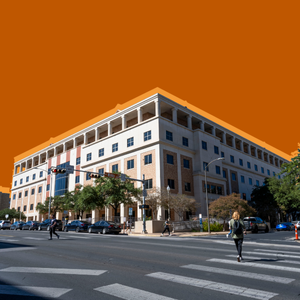
University Health Services (UHS) is the on-campus clinic for students enrolled in UT health insurance. The clinic is located in the Student Services Building at 100 West Dean Keeton St.
- ELC students must call (512) 471-4955 to schedule an appointment with UHS.
- Hours: Monday-Friday, 8 a.m.-5 p.m.
UHS offers many types of care, including:
- Routine medical care
- Primary care
- Women’s health
- Allergy and immunizations
- Laboratory services
- Physical therapy
Urgent Care Clinics

Urgent care is appropriate for conditions that need prompt attention but are not life-threatening — for example: sprains, high fever, flu symptoms, persistent cough with fever, vomiting, or diarrhea.
For guidance on where to seek treatment for urgent medical care, visit the UHS Medical Emergencies website.
University Health Services Primary Care
- Location: Student Services Building
- Phone: (512) 471-4955 (ELC students are required to call first.)
- Cost: $ (low)
- Hours: Monday-Friday, 8 a.m.-5 p.m.
- Address: 3906 North Lamar Blvd., Suite 100
- Phone: (512) 861-8040
- No appointment needed.
- Cost: $$ (medium)
- Hours:
Monday-Friday: 8 a.m.-8 p.m.
Saturday: 8 a.m.-7 p.m.
Sunday: 8 a.m.-5 p.m.
Emergency Room (ER)

Call 9-1-1 if your condition is life-threatening or if you are in severe pain. An ambulance will be sent to your location. Ambulances can be expensive, but they may save your life in a true emergency.
Go to the emergency (ER) for very serious or life-threatening issues, such as severe chest pain, difficulty breathing , paralysis , severe injury , or intense or worsening pain.
Emergency rooms are open 24 hours a day, seven days a week, and can be accessed by walking in or by calling 9-1-1 for immediate assistance. Costs are generally high ($$$$), but ERs are equipped to treat life-threatening or very severe medical conditions.
Hospitals in the Austin Area
Navigating the U.S. health care system takes time, but the more you learn, the easier it becomes. Keep your insurance card with you, ask questions when you are unsure, and use the resources available through UT to help you get the care you need.
By understanding your coverage and knowing where to seek medical attention, you’ll be better prepared to stay healthy throughout your time at the English Language Center.
This blog post was contributed by Jack Taylor, administrative associate of global engagement at the English Language Center.
Leave a Reply