
Finals can be a busy and stressful time. You may have exams, projects, presentations, or many assignments due at the same time. It is normal to feel pressure at the end of the semester, but taking care of yourself can help you feel calmer, stronger, and more prepared.
Self-care does not need to be complicated. Small choices like getting enough sleep, eating regular meals, moving your body, and staying connected with friends can make a big difference.

Understanding Stress
Stress is the body’s reaction to a challenging situation. In the short term, stress can help you focus, meet deadlines, or respond to problems. However, long-term stress can affect your physical and mental health and make it harder to reach your goals.
During finals, you may notice changes in your sleep, mood, appetite, energy, or concentration. These are signs that your body and mind may need extra care.
Study Smart, Not Just Hard
Good study habits can help reduce stress. Instead of studying for many hours without a plan, try to make a schedule. Break large tasks into smaller steps, and give yourself time to review before each exam.
The Study Cycle is one helpful method. It encourages students to preview material before class, attend class, review notes, study actively, and check their understanding. You can reinforce your learning by writing, speaking, drawing, or explaining ideas in your own words.
Short study sessions with breaks can often work better than one long session. Try studying for 30-45 minutes, then taking a short break to stretch, walk, drink water, or rest your eyes.

Move Your Body
Physical activity can help reduce stress and support your mood. You do not need to do a hard workout to feel the benefits. A short walk, light stretching, yoga, or dancing to music can help your body release tension.
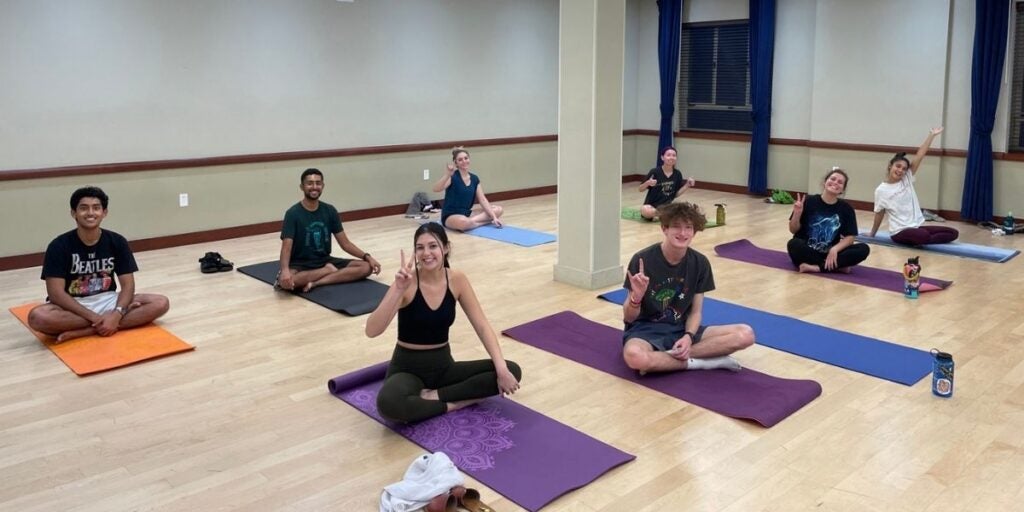
Yoga can be especially helpful because it connects movement, breathing, and mindfulness. It is a flexible practice that supports both mental and physical well-being.
Students can try free online videos, such as Yoga with Adriene, or look for student groups like Longhorn Yoga. Longhorn Yoga offers free weekly yoga sessions during the fall and spring semesters and welcomes both beginners and experienced students.
Eat Regular Meals and Stay Hydrated
When students are busy, it can be easy to skip meals or drink too much caffeine. However, your brain and body need food and water to focus. Try to eat regular meals with a balance of protein, grains, fruits, and vegetables.
Simple meals and snacks can help during finals. You might choose yogurt and fruit, a sandwich, soup, rice and vegetables, nuts, eggs, or a smoothie. If you are studying for a long time, bring a snack and a water bottle with you.
University Health Services offers nutrition services for students, including nutrition education, skills workshops, and individual consultations with a registered dietitian.

Protect Your Sleep
Sleep is important for memory, focus, and emotional health. Many students sleep less during finals, but staying awake all night can make it harder to think clearly the next day.
Try to keep a regular sleep schedule when possible. Before bed, take time away from schoolwork and screens. A short walk, shower, breathing exercise, or quiet music can help your body relax.
Healthyhorns Sleep offers resources, education, and programs to help students understand sleep habits, rest, and napping.

Stay Connected with Others
Finals can feel lonely if you spend all your time studying alone. Social connection is also part of self-care. Talking with a friend, eating a meal with classmates, or studying with a small group can help you feel supported.
You do not need to spend a lot of time socializing. Even a short conversation, a walk with a friend, or a message to family can remind you that you are not alone.
If you study with others, choose people who help you stay focused and calm. You can review vocabulary, practice speaking, quiz each other, or explain difficult ideas together.

Practice Mindfulness and Relaxation
Mindfulness means paying attention to the present moment without judging yourself. It can help when your mind feels busy or worried. Like any skill, mindfulness becomes easier with practice.
You can try a short breathing exercise, a three-minute body scan, or a quiet walk outside. You can also use MindBody Lounges on campus. These quiet spaces offer guided relaxation, mindfulness audio, sensory tools, and calm areas where students can take a break.
MindBody Lounges are available in the Student Services Building, the William C. Powers Jr. Student Activity Center, and the McCombs Wellness Center. Check in at the front desk or reception desk for each location before using the space.

Use Campus Resources
You do not have to manage finals stress alone. Healthyhorns includes University Health Services, the Counseling and Mental Health Center, and the Longhorn Wellness Center. These resources support students’ physical, mental, and overall well-being.
The Counseling and Mental Health Center provides mental health support for UT Austin students. The Longhorn Wellness Center also offers programs, workshops, peer education, and campuswide campaigns that support student well-being.
If you feel overwhelmed, anxious, or unable to manage daily tasks, reaching out for help is a strong and healthy choice.

Finish the Semester Strong
Finals are important, but your health is important, too. Try to take things one step at a time. Make a plan, take breaks, eat regular meals and drink plenty of water, sleep when you can, and stay connected with people who support you.
Small habits can help you feel more balanced during a stressful time. Be patient with yourself, use the resources available to you, and remember that taking care of yourself can help you finish the semester strong.
This blog post was contributed by Jack Taylor, administrative associate of global engagement at the Texas Global English Language Center.
Leave a Reply